Jump rope warm-up
Six rounds of 30 s with 10 s of rest, three footwork drills done twice. Run it before any session, or on its own on an easy day.
A jump rope warm-up gets the rope turning and your feet in rhythm before the real work. This one takes 3:50: six rounds of 30 s, each with its own footwork drill, and 10 s of rest between rounds. It works at any level, and it goes before any other session: a Tabata, boxing rounds or a long, steady jump.
How the warm-up works
Six rounds of 30 s, with 10 s of rest after every round but the last. Three drills run in order, then repeat:
- Rounds 1 and 4, bounce: both feet together, small hops.
- Rounds 2 and 5, alternate foot: one foot then the other, like jogging in place.
- Rounds 3 and 6, side to side: both feet hop left and right, like a skier.
That’s 3 minutes of jumping and 50 s of rest. There’s no rest after round 6, so the clock reads 3:50 rather than 4:00.
How to warm up with a jump rope
Keep it easy. You want to start your main session loose and in rhythm, with nothing spent.
- Check the rope. Stand on its middle and pull the handles up: they should reach about your armpits.
- Start the first bounce slowly, around 90–100 jumps per minute. Stay light on the balls of your feet and jump just high enough for the rope to pass, about an inch.
- Let your wrists turn the rope. Keep your elbows close to your sides and your hands near hip height, a little in front of you.
- On alternate foot, keep the steps small and quick. Your knees barely lift.
- On side to side, move a few inches each way. Land softly with your feet together.
- Breathe at an even rhythm through each round. In the 10 s rests, keep the handles in your hands, drop your shoulders and get set for the next drill.
The second pass, rounds 4 to 6, can run a little quicker than the first. If you train at 120–140 jumps per minute, let the last round come close to that pace.
Make it easier or harder
- Easier: bounce in every round, or take 20 s of rest instead of 10. If the rope’s timing still feels shaky, stop after four rounds.
- Longer: add a third pass for nine rounds. Keep the pace easy, since this is still a warm-up.
- Different footwork: swap side to side for high knees or a boxer step once the basic three feel automatic.
- Rope: a lighter rope turns faster and asks for sharper timing. A heavier rope turns slower and puts more work into your shoulders and forearms. Warm up with the rope you’ll use in the session.
In the app
Warm-up is one of the workout presets in Jump Rope Protocol, an iPhone app with an Apple Watch app. The presets open from the Today tab. On the start screen, you can change the rounds, work and rest for that session before you begin.
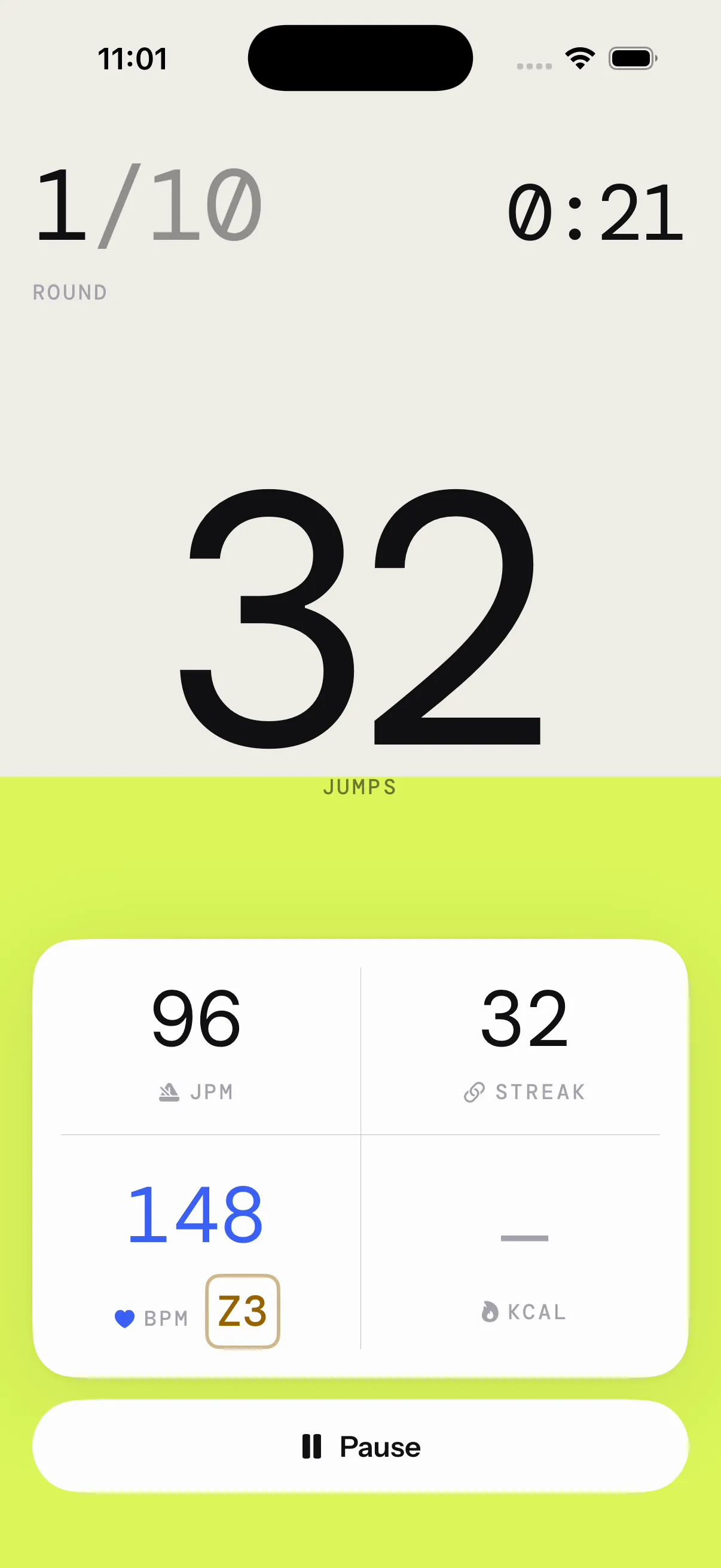
A countdown leads into round 1. Then the app runs the clock, and a voice calls each round, the rest and the time left, so you never need to look at the screen. The app counts every jump with your AirPods, Powerbeats or Apple Watch while the phone stays on the floor. With headphones, it reads your head’s motion. After the session you have your jumps, your cadence, your longest unbroken streak and your trips, saved to your history and to Apple Health.
The timer on this page runs in your browser. It beeps, but it can’t count jumps.
The workout presets are part of Pro, a single purchase with no subscription. Counting and Free Jump stay free.
Questions
- How long should a jump rope warm-up last?
- This one takes 3:50: 3 minutes of jumping and 50 s of rest. If your calves or shoulders still feel stiff at the end, run the first three rounds again at an easy pace before your main session.
- Which drills are in this warm-up?
- Bounce, alternate foot and side to side, in that order, then the same three again. Bounce keeps both feet together. Alternate foot is one foot then the other, like jogging in place. Side to side hops both feet left and right, like a skier.
- How fast should I jump during a warm-up?
- Slower than your training pace. Around 90–100 jumps per minute is plenty, even if you usually jump at 120–140. You should be able to speak in short sentences. Keep the fast turns for the session that follows.
- Can a beginner do this warm-up?
- Yes. If side to side keeps catching the rope, bounce in those rounds instead. Short rounds and frequent rests make it a good routine for learning the rope’s timing.
- Should I warm up with a different rope?
- No. Warm up with the rope you’ll train with, so your hands and timing get used to its weight and speed before the hard rounds.